Categories
New

Things 2025 Q3: Neuromancer, Expertise, Consciousness

Brian David Gilbert (BDG)

BDG makes the kind of weird videos I wish I had my act together enough to make. Here’s two examples that show his range.

A short song about hats:

A slightly spooky promotional video about get-rich-quick schemes:

I think we need more of this kind of thing, so please go watch all of his videos and even consider his Patreon.

(Side-note: BDG reminds me of Spike Jonze both as a person and for his creative output.)

Neuromancer and the Prism of Hindsight

I recently read William Gibson’s 1984 debut novel, foundational cyberpunk text ‘Neuromancer’.

It projects ahead to an unspecified time in which everything is online, and hackers enter some sort of cyberspace ‘matrix’ to conduct various shenanigans. It’s also very much about cybernetic enhancement, with some consideration of AI and some space business. It’s noirish and fast-paced but also dense and intense. There’s a lot going on.

My first thought was that being written in 1984, it seems astoundingly prescient about the future online world.

Then I read that Gibson didn’t really know much about computers or networks, he just liked the language of it. So my second thought was perhaps you need to be far enough removed from a thing, like he was, to see where it will lead.

Then I paid attention to the cover of the copy I had been lent (by Nick H), and realised something strange: it seemed to have some of the hallmarks of an AI-generated image.
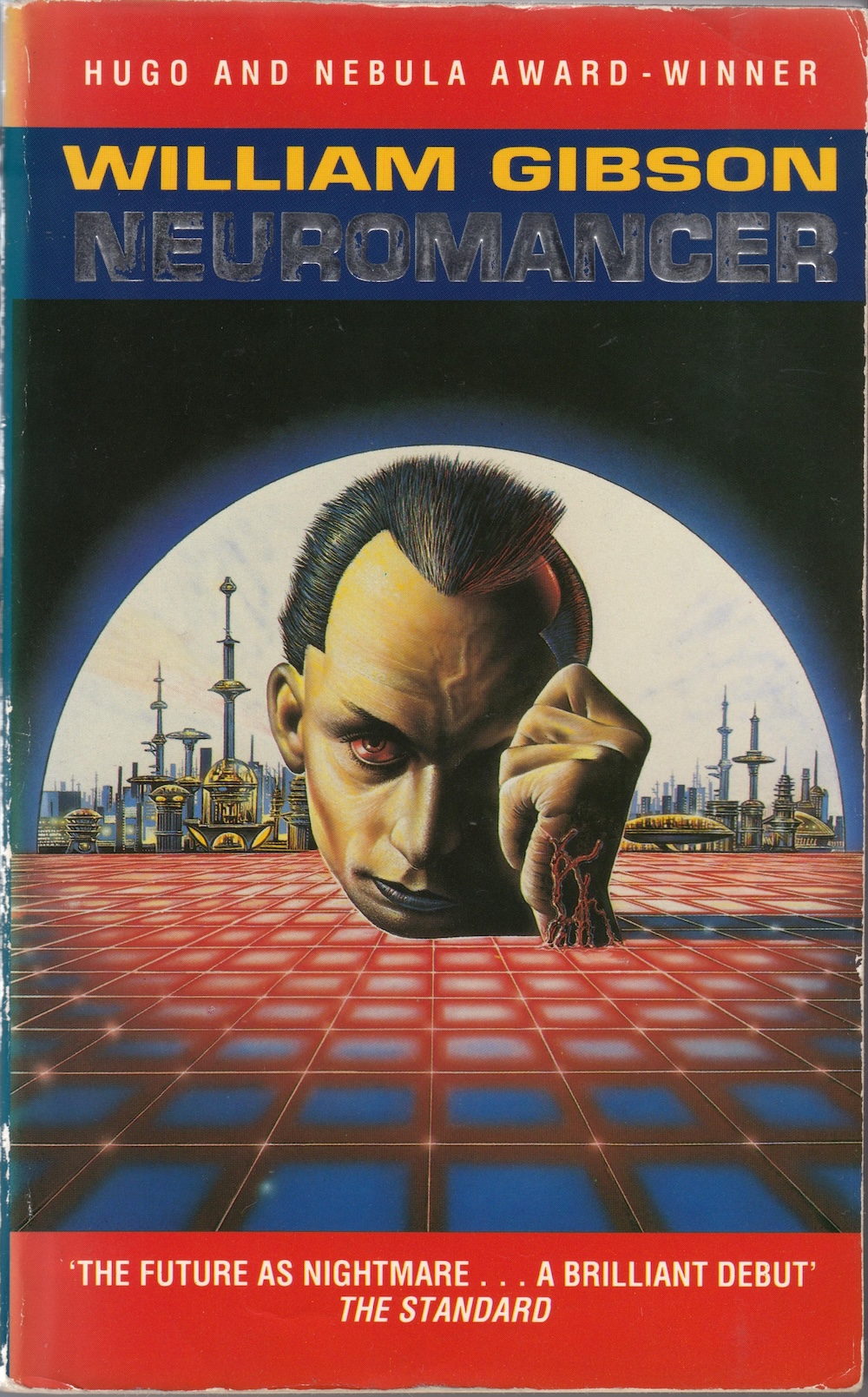
Examples:

  • The core composition is a bit odd
  • The shape of the hairline is dramatically and weirdly asymmetrical
  • There’s a strange artefact on the hand that doesn’t seem specific or prominent enough to represent anything
  • The cityscape in the background has some repeating patterns that a human artist would probably try to avoid
  • Some of the domes in the cityscape seem unintentionally asymmetrical

Of course, this thing was published in 1984, and this art is by a human (Steve Crisp). I’m looking at something from the past through the prism of hindsight; in the context of a “futuristic” image, I’m primed to look for AI signifiers.

So comes my third thought: my thoughts on the book being astoundingly prescient also come through the prism of hindsight.
– I’m discounting everything that doesn’t really add up (the 3D visual interface isn’t realistic or sensible; there’s an eye-hacking thing (I think?) that doesn’t really make sense; the stuff in space seems very fanciful)
– I’m over-reading the things that were prescient (the everything-is-online aspect, the ability to leverage that fact to achieve powerful feats with ‘hacking’
– I’m under-reading the parts that really weren’t prescient, at least so far (the cyber-business and simulation aspects mostly).

This doesn’t really diminish the book – it’s a fascinating and impressive work, building out its own strange reality, and inspiring The Matrix (1999) even more directly than I had assumed. You just have to be a bit careful when judging prescience.

Very Short Animal Videos

Thanks to the Reddit algorithm for serving me these tasty and very short animal videos. They are optimised for portrait though and I use YouTube videos to embed things, so I’m not sure how well this will work:

“My cat will eat anything”:

Eating anything
byu/TheHenanigans inUnexpected

“Cat tries ice-cream for the first time”

he tried ice cream for the first time
byu/tuanusser inholdmycatnip

Sound needed for these:

Surprise:

Trying out a new de-corker when..
byu/fpotw infunny

The Paradox of Expertise

An exchange I saw recounted online and can no longer find went something like this:

A: Oh, do you consider yourself some sort of expert in vaccines then?

B: Well yes, I studied medicine and specialise in vaccines

A: Don’t you think that makes you biased?

Humans are prone to confirmation bias. We tend to give heavier weight to things that support what we already believe, and lighter weight – or none at all – to those that contradict it.

What I find even more insidious is a kind of second-degree confirmation bias: we discount someone’s remarks as being due to their confirmation bias… due to our own confirmation bias. For example, someone might doubt a particular bit of well-evidenced medicine, but when they hear a medical expert defend that thing, they assume the expert is only defending it due to the expert’s own confirmation bias.

Without getting deep into the concept of hierarchical trust networks, this is quite difficult to cleanly dissect, because confirmation bias is a real thing.

For example, you may recall that Researcher Bias exists*: a researcher who believes that an experiment will yield a certain outcome is more likely to end up getting that outcome, even if they are not intentionally manipulating the experiment to that end.

*But aren’t the studies looking into Researcher Bias suspect? As I wrote about in Things 133, a meta-analysis and even a meta-meta-analysis cannot satisfyingly answer this question.

You also see this in Planck’s principle: “A new scientific truth does not triumph by convincing its opponents and making them see the light, but rather because its opponents eventually die and a new generation grows up that is familiar with it” – colloquially and bleakly paraphrased as: Science progresses one funeral at a time.

Or the Upton Sinclair quote:

It is difficult to get a man to understand something, when his salary depends on his not understanding it

If all this sounds a little vague and theoretical, I recently faced it head-on: a small stand of bamboo began to spread in my small garden. I know that some particular species of bamboo can spread very aggressively and do real damage. So what I need is an expert who can identify what kind of bamboo it is, and then I’ll know if I need to pay for some other expert to help get rid of it.

The trouble is those two experts are the same company. They will assess the bamboo for you, and then if they think it needs to be removed they will offer you the (quite expensive) service of removing it. The obvious question is: can I trust them to diagnose it correctly, if they know they can make money from one particular diagnosis? (My best guess for this was to at least consider the opinions of two different experts).

The same can be said of any product you buy in which the amount of it you should use is unclear. How many Aspirin should you take, how much sunscreen to put on how often, what collection of skincare products? The people who make these things should really know the answer, but they also make more money if they can convince you to use more than you need.

Infamously, Alka-Seltzer increased sales by normalising the use of two tablets instead of one through their advertising (and tagline, ‘plop plop, fizz fizz’, or ‘plink plink fizz’ in the UK). Still, the origin story (Snopes link) does at least suggest this did originate with a doctor suggesting two would work better than one.

This also runs the other way – a product could offer a legitimate advantage, but by default we don’t believe it when they tell us. I recall the story of a certain battery manufacturer having a significant research breakthrough making their batteries as much as 20% more efficient, an advantage they kept for a few years. Unfortunately from the consumer perspective, all batteries are claiming some kind of mysteriously special efficacy, so it’s hard to trust any one of them as being particularly meaningful. (I wish I could remember who this actually was!)

One possible answer here is Which?, who try to assess consumer product effectiveness with scientific tests. Of course, when they find a product doesn’t do what it should, the manufacturer will usually counter that they didn’t test it properly, and claim that they have a better understanding and more accurate test of their own product. Depending on the product in question I tend to find this more or less compelling.

So what, really, should we do about this?

In some cases, as I alluded to earlier, there are ‘trust networks’. I don’t need to trust a single vaccine expert on their effectiveness, because they are endorsed by thousands of disparate experts, and disparaged by a small number of non-experts (who can also have their own biases, if for example they are selling an alternative).

In other cases the direct incentive structure seems to run very strongly one way – it doesn’t seem to me that climate scientists finding evidence for climate change benefit from that conclusion anywhere near as much as climate-deniers trying to sell you an online course about their views benefit from people believing their denial.

For substances such as sun-screen and painkillers, the proper quantity to use tends to be endorsed by professional bodies, not just the people who sell them. In the case of painkillers you are of course free to experiment with a lower dose and judge the results for yourself.

When it comes to academic research, you can often look into the funding source. If a study casting doubt on climate change is funded by a big oil company, maybe it’s worth looking for other studies.

It feels like I’ve climbed all the way up a mountain of concern only to climb all the way back down again, so, er, maybe it’s fine???

Emel – the Man Who Sold the World

I enjoy David Bowie much more as an actor (Labyrinth, The Prestige) than as a musician, but this cover of ‘The Man Who Sold the World’ stopped me in my tracks. Emel’s delivery seems much more suitable for the slightly spooky lyrics than Bowie’s, and the extended glissando vocal at the end was so compelling I bought a Theremin (this one) in an ultimately misguided attempt to find a way to make a similar sound.

The Science of Consciousness

Here’s the ‘hard problem of consciousness’ as David Chalmers puts it:

It is widely agreed that experience arises from a physical basis, but we have no good explanation of why and how it so arises. Why should physical processing give rise to such a rich inner life at all? It seems objectively unreasonable that it should, and yet it does.

I had previously thought there was nothing interesting here. We only have our own experience of consciousness to go on, so it seems unjustified to consider it “objectively unreasonable”; this is just how it turns out and there’s nothing more to say. (Previously I wrote about Chalmers’ other formulation, the meta-hard problem of consciousness, although perhaps I misread his intent).

I read the book “Being You: a new science of consciousness” by Anil Seth, and I’m excited to have slightly changed my mind as a result!

An argument against there being anything about consciousness to dig into is the ‘philosophical zombie’: a creature that in every way resembles and reacts like a normal human but lacks consciousness. This is easy to imagine, and suggests there’s nothing you can “do science on” because there’s no way to distinguish the zombie from a human that does have consciousness.

Seth makes this counter-argument: “Can you imagine an A380 flying backwards?” In one sense, this is easy – just picture a large plane in the air moving backwards. But “the more you know about aerodynamics and aeronautical engineering, the less conceivable it becomes”. The plausibility of the argument is “inversely related to the amount of knowledge one has”.

One could imagine the same thing applies to consciousness – it does seem like if you deeply understood the way in which consciousness arises, “imagining” a philosophical zombie would be a lot harder. That does seem fair to me!

But still, how do you find a way in to this topic?

Seth’s answer is what he calls the ‘real problem of consciousness’: to explain, predict and control the phenomenological properties of conscious experience. Still difficult, but at least something specific to aim for.

His first way in is to consider how we might measure how conscious someone is – specifically the level of awareness rather than wakefulness. The diagram below shows how different states sit across these two axes.
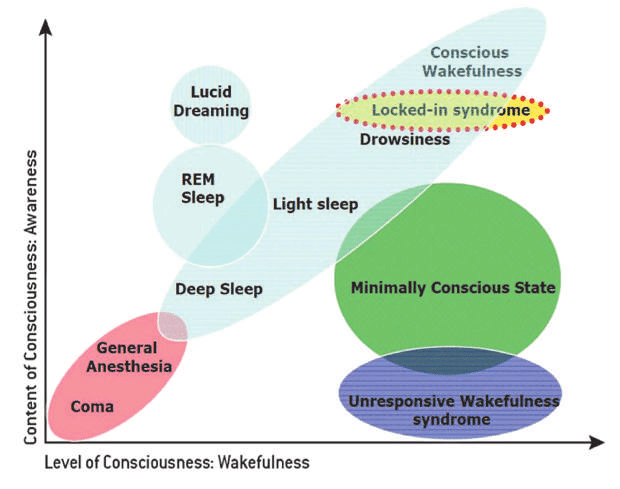
So we’re looking for some kind of measurement that would show regular conscious wakefulness as having a similar level to lucid dreaming, for example.

He talks about some interesting research showing that a measure of the complexity of electrical signals in the brain seems to correlate well with what we think of as consciousness. Even better, there are tests that can distinguish someone with ‘locked-in syndrome’ (conscious and aware but unable to move any part of the body) from someone in a ‘vegetative state’.

A simpler precedent to the complexity model is this: simply imagining playing tennis produces a detectably different pattern of brain activity to imagining navigating a house. These two kinds of thoughts can therefore be mapped to ‘yes’ and ‘no’, enabling someone with locked-in syndrome to communicate. This dramatically debunks my thought that there was nothing useful to look into here!

Unfortunately, the rest of the book gets quite a bit heavier and less compelling.

First there is Giulio Tononi’s “Integrated Information Theory” (IIT) of consciousness. Put tersely it posits that consciousness is integrated information – kind of a huge claim as it arguably means even atoms are perhaps a ‘little bit’ conscious. It suggests a very specific measure of consciousness: Φ (Phi), essentially how much an information system is more than the sum of its parts.

This theory doesn’t seem to go very far just yet. Seth’s summary of where it is at:

…some predictions of IIT may be testable […] there are alternative interpretations of IIT, more closely aligned with the real problem than the hard problem, which are driving the development of new measures of conscious level that are both theoretically principled and practically applicable.

So it seems we just have to wait to hear a bit more about that.

Next is the Karl Friston’s “Free Energy Principle”. In this, the term ‘free energy’ can be thought of as a quantity that approximates sensory entropy. The clearest summary Seth makes is this:

Following the FEP, we can now say that organisms maintain themselves in the low-entropy states that ensure their continued existence by actively minimising this measurable quantity called free energy. But what is free energy from the perspective of the organism? It turns out, after some mathematical juggling, that free energy is basically the same thing as sensory prediction error. When an organism is minimising sensory prediction error, as in schemes like predictive processing and active inference, it is also minimising this theoretically more profound quantity of free energy.

This is not really a theory of consciousness but, Seth considers, something that will help explain consciousness eventually. I get the impression Seth understands this enough to see how it might be of value, but not well enough to explain it so others can see that – at least not me.

Finally Seth considers the possibilities of animal and machine consciousness, and largely concludes it’s very hard to say anything about these, which is a bit disappointing but is also quite fair.

To summarise, I thought there was nothing useful to say or do about consciousness, but after reading ‘Being You’ I now think that’s wrong; it seems like there is something to dig into here, but so far our theories are only just scratching the surface of it.

(If you want a more detailed recounting of the book with added commentary, not all of which I agree with, you can read this long review by ‘Alexander’ on LessWrong)

  • Transmission ends
Categories
Special

Things August 2017: Archive Adventures – part 2

Last time I shared the first half of the exciting archive of historic unused Things. In this second half, I’ll cover music, games, writing, and some data visualisation. Enjoy!

Video/Audio

I was collecting examples of music where I felt the production process was the main contributor to the quality of the song (rather than the songwriting or performance), examples being Britney Spears – Toxic, Mark Ronson – God Put a Smile on Your Face, and the Space Channel 5 theme tune. Then I wondered if actually I just like crisp brass and distorted orchestral sounds, and have no ear for production at all, so wasn’t sure whether I could meaningfully comment. But listen to those songs as a set and see what you think!

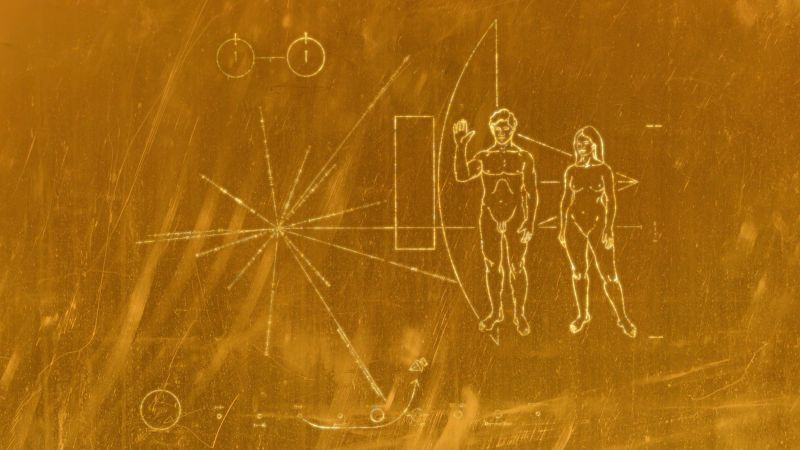
Putting a record of important sounds from earth in a spacecraft and shooting it out of the solar system is pretty speculative (although I’d argue we don’t know enough about the parameters in the Drake equation or the full potential of technology in this universe to know just how speculative) – but is also a profoundly optimistic and beautiful act, so I’m really glad we did it.

Some trivia that hilariously undermines the beauty of the gesture: EMI refused permission for The Beatles’ “Here Comes the Sun” to be included; and the engravings showing what humans look like (naked) were actually censored and therefore inaccurate.

Copyright issues have always made it challenging to listen to the full Voyager track listing on earth, but the copyright-subverting hydra that is YouTube solves this problem, and I highly recommend making time to appreciate the playlist.

https://www.youtube.com/watch?v=Bhuq9rNO_FQ&list=PLA5Z0m2JKyVJUgkMG08WP8KsAvLrjfkjP

[Haha, no – that’s dead. Try this youtube search – T.M. 7/4/21]

And this just in, with a title that sets expectations perfectly, another candidate for music-to-share-with-the-galaxy: Duel of the Fates on Trombones

Games

I previously wrote about game-maker Jason Rohrer in Things 121 (specifically on Chain World, a game intended to become a religion). In 2014 he released The Castle Doctrine, a game about gun-ownership through the medium of PvP house-security design and burglary. Players design a secure ‘house’, with the restriction that it must be possible to break into without tools; they then try to break into other player’s houses to steal loot, and then store that loot in their own house and hope their design keeps other thieves out. Total loot owned is public, so a nice feedback loop emerges where a more successful player will attract more burglary attempts.

The challenge for such a game design is you need to come up with creative opportunities and restrictions that will emergently lead to players creating a huge range of fascinating house-designs. I particularly enjoyed the systems-design reasoning at work in Rohrer’s post on some of the design changes he had to make in response to players converging on clever (but boring) solutions.

In mobile games, the mind-bogglingly successful Clash of Clans (and its many clones) operates on a similar basis with (very) light real-time-strategy gameplay, but the strategic variety seems ultimately quite weak. I’m more impressed by King of Thieves, also operating on the same idea but with single-screen platformer gameplay. It’s free, so if that sounds at all interesting you should check it out (on iOS and Android). Unfortunately the late-game becomes about pixel-perfect jump timing which is a bit less fun.

Self-improvement

I can’t remember what I was thinking when I added this link, but perhaps that in itself is telling: Kottke’s extract from an Adam Phillips interview, “The need not to know yourself“.

I suspect that procrastination is a challenge for a large number of people, and found that Quora has a collection of highly upvoted answers. I personally found the best approach is a mixed strategy: trying lots of things in sequence. So this is a good place to go to find lots of ideas.

Writing, Data Visualisation, Everything Else

A good long read is, these days, the closest I get to the escapism of a good novel: a chance to inhabit and explore another world-view. If you’re the same, you’ll probably enjoy this long article on novels, tragedy, comedy, and religion on two levels. Sample quotes:

“the invention of the novel privatised myth, because the novel, invented after Aristotle, did not have a holy book. The novelist was on his own. Sometimes he’s even a she. There were no rules.”

“As they became professional, writers began to write about writers. As they became academicised, writers began to write about writing.”

“You may think that to praise The Simpsons at the expense of Henry James makes me a barbarian. Well, it does, but I’m a very cultured barbarian. The literary novel has gone late Roman. It needs the barbarians.”

There was an article about a trend online to use “?” where formal writing used a hyphen, for example:

“The greatest pleasure of all – the categorisation of minutiae.”
“The greatest pleasure of all? The categorisation of minutiae.”

I felt that captured something I’d seen and been annoyed by, and figured I would collect some examples. I guess shortly after that I just started to accept it and didn’t collect anything, and then couldn’t find the original link, leaving this a bit of a non-thing. Although I think the fact I abandoned it is at least somewhat interesting.

Unremembered by present me, and unexplained by past me, the Things archive includes a link to the Tableau product support page.

Here are some fascinating maps on the distribution of blood types.

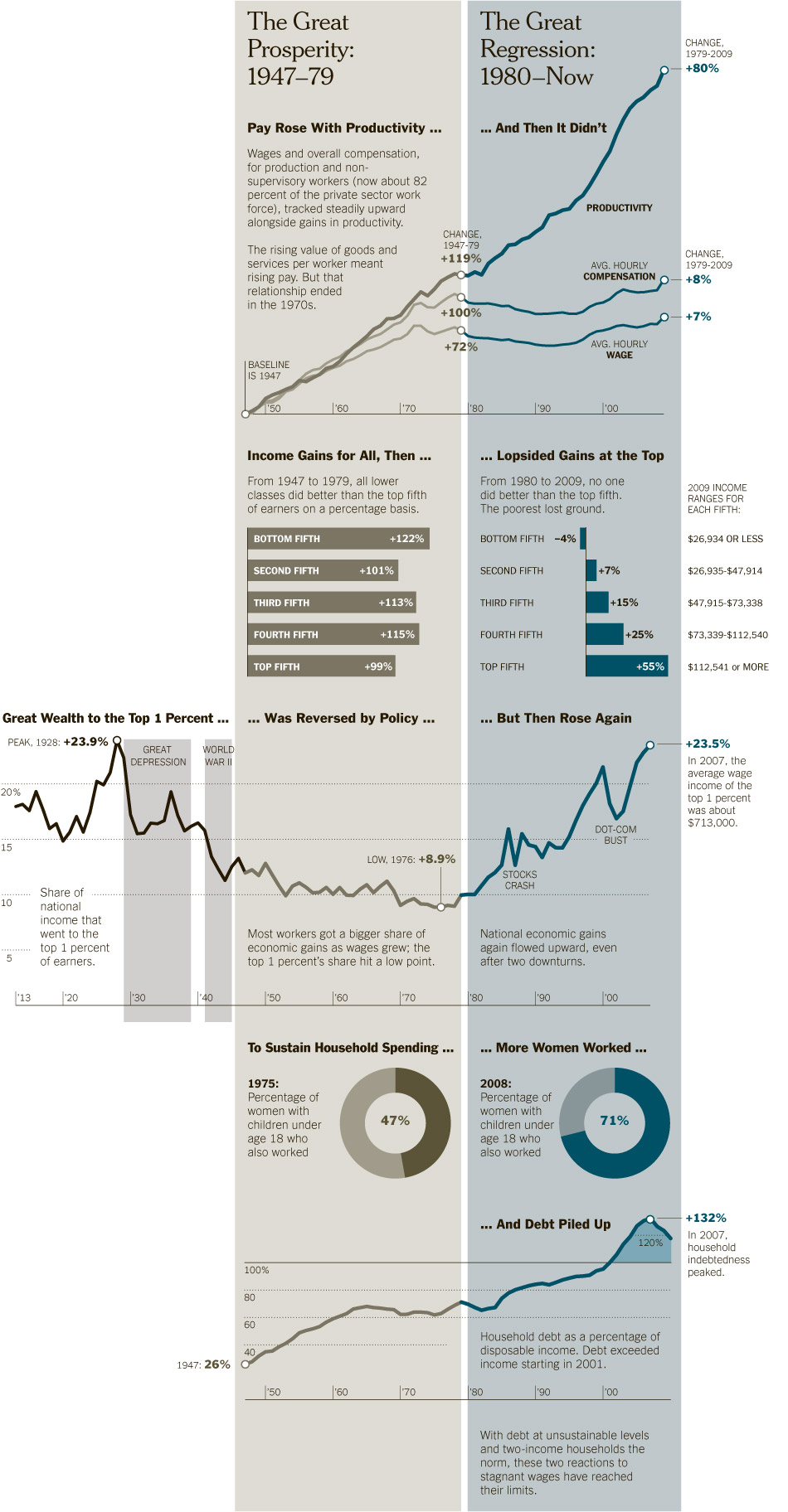
And finally, a superb example of giving insight into long-term trends using well-designed data visualisation: The Great Prosperity (1947-79) and The Great Regression (1980-2009)


(Click for full version)

– Transmission finally ends

Categories
New

Things April 2017: Multiplayer Mobile games, Weight loss and Physics, Paranoia and Tolerance

This issue of Things was initially drafted in January 2016 and for various reasons is just coming out now. Let’s see how out of date it is…

Mobile Game of the Moment: Dreii

Mobile gaming is very exciting, because touch-interface location-aware always-online devices open up an amazing new landscape of interactive possibilities. Mobile gaming is also very depressing because these possibilities are rarely harnessed in an interesting way, and even when they are it rarely leads to commercial success.

This is exactly why I’m recommending you get Dreii right now (available on Android, iOS and also on Steam).

It’s an elegant physics-based puzzler in which you try to stack objects under various challenging constraints. The really brilliant bit is that you get to co-operate with anyone else that happens to be playing the same level (on any device) at the same time as you. There’s also a rather lovely map visualisation in which you can see what levels others are playing to better seek them out – or go back and help another player make it through to the one you’re stuck on!

The helpfulness of others is massively varying, which is part of the charm. I recommend it right now as the recent launch ensures a goodly surge of currently active players.

Update: well, that was written about a year ago, so I can’t really recommend it as much because few are now playing it. You can do local co-op with someone else playing at the same time though, so it’s still worth a go if you can arrange for that!

Or go and play the other brilliant game I got into in the intervening time: Snakebird (iOS, Android, Steam), an incredibly simple yet extremely difficult puzzle game.

Or go and play Crash of Cars (iOS, Android), which is real-time arcade-style car combat and is being played by a few million people at the time of writing.

Humans are More Complicated than Physics, part 94: Weight vs Diet

If you want to lose weight, don’t eat. This is not medicine, it’s thermodynamics. If you take in more than you use, you store it.
– Michael Bloomberg

It seems most people agree with Bloomberg’s appealing logic. It turns out, as it often does, that humans are more complicated than simple physics would suggest.

Vox has a great look at the energy-in energy-out model here. The most striking conclusion of their wide-ranging review of research is that exercise is great for health, but not for weight loss. For weight loss, diet is a much more important component. So Bloomberg is sounding roughly right, but the mystery then deepens when we consider a study that found people on the same diet and exercise regimes put on more weight now than they did in the 80’s.  Note that although the Atlantic’s headline is “Why It Was Easier to Be Skinny in the 1980s”, the article doesn’t answer the question, because we don’t actually know. We just have some theories.

Finally, on Aeon, David Berreby dives a lot deeper into this mystery. Most striking for me was the finding that over the last two decades, animals as well as humans have gained weight – including lab mice, which have gained an average of 11% per decade despite having rigorously consistent diets. If you want to read about some fascinating theories on why this might be happening (light? BPA? A virus?), go check it out.

Since that was all a bit depressing, here’s some fun data on how the UK’s diet has changed over time.

Paranoia in Politics

Quite a few months ago (er, a year ago now) Charlie Stross wrote about the Paranoid Style in politics. He cites two fascinating essays charting the relationship between paranoia / conspiracy-theories and US Republicans (one from 50 years ago and one more recent). Things like “9/11 was an inside job”, vaccine-related conspiracies, or any time you hear the phrase “Liberal elite”. Stross then adds his own interpretation of how the internet has reinforced this and given rise to (take a deep breath) an “ad-hoc movement of angry ideologues who have jabbed their fungal hyphae into the cerebral cortex of Reddit and n-chan to parasitically control the rageface collective.”

Well, a year has gone by and this has all become rather more clear. I think the only useful thing to add is that Popularism (in the sense of a political movement that believes most of the existing power structures are self-serving, corrupt, and out-of-touch) is clearly a close relative of the Paranoid Style.

Google Image Reverse Search growing in Intelligence?

If you want to search based on an image (to find where it came from, or a higher resolution version) you can use TinEye and get limited but exact results. Or you can use Google’s “Search by image” functionality to get a wide range of approximate results. I do this quite a lot while trying to track down the artists behind work I post on my daily drawing Tumblr.

I recently tried to use it to trace the origin of this piece:

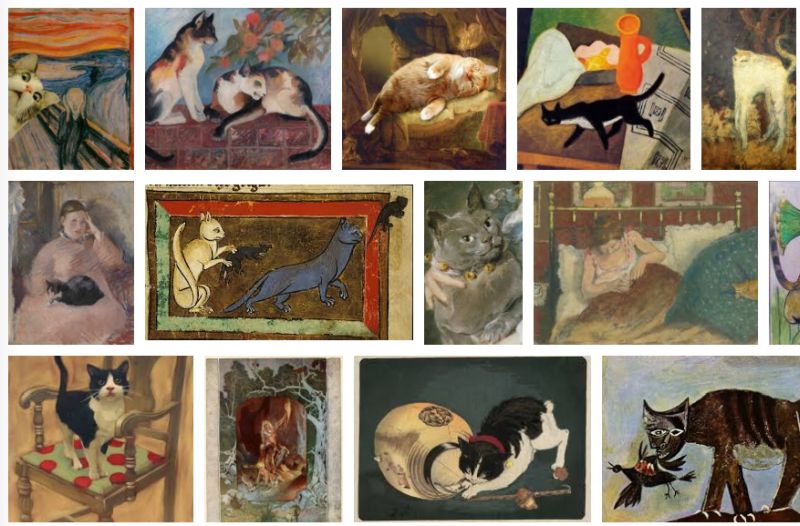
I was unable to find the artist, but I was extremely impressed that Google suggested a page of ‘similar images’ which were indeed a lot of paintings of cats with a similar colour palette and often distorted proportions:

You can of course use these properties of the search algorithm to generate art.

Tolerating the Tolerable

I can Tolerate anything except the Outgroup” is an essay by Scott Alexander on filter bubbles and tolerance. It’s so interesting to me that I’ll summarise it all below, but I recommend reading it in full.

  • Alexander defines Tolerance as “respect and kindness toward members of an Outgroup”, and defines an Outgroup as a group that has “proximity plus small differences”: a group of people who live in the same neighbourhood but who are ‘slightly’ different to you. I’m capitalising these terms because the definitions aren’t sufficiently general – for example, you could be racist but still Tolerant under this definition.
  • He broadens typical US political alignments into ‘tribes’: Conservatives are Red tribe, Liberals are Blue tribe (the US political colour binary reverses the UK’s). As a side note he also identifies a libertarian-leaning Grey Tribe, which I’ve found to be a useful concept – the Grey tribe is typified by:

“…libertarian political beliefs, Dawkins-style atheism, vague annoyance that the question of gay rights even comes up, eating paleo, drinking Soylent, calling in rides on Uber, reading lots of blogs, calling American football “sportsball”, getting conspicuously upset about the War on Drugs and the NSA, and listening to filk”

  • Alexander then asserts that the liberal Blue tribe’s outgroup is in fact the Red tribe. He gives the interesting example of being roundly criticised by Blues for expressing any kind of relief at Osama bin Laden’s death, only to later see those same people openly celebrating the death of Margaret Thatcher.
  • Finally, he suggests that political articles that reference ‘Americans’ or ‘White people’, written by Blue tribe people (who are notionally included in those groups), are tacitly actually about Red tribe members, and when a Blue says “I can tolerate anything except intolerance”, they are identifying intolerance with the Red tribe and are actually saying “I can tolerate anything except the Red tribe / my Outgroup” which no longer sounds that impressive.

In an excellent coda, Alexander then realises that he’s doing the same thing: criticising a group he notionally is a member of (the Blue tribe), but actually criticising his Outgroup, as he realises he’s probably Grey.

While I think this is an interesting argument, I do think it’s important to note that being intolerant of a group of people who hold opposing political views (which can’t be identified on sight, and can change) seems far less egregious than being intolerant of people who simply look a certain way. Views are, after all, one step away from Actions, but that’s a distinction I’ll get to in the next edition of Things.

– Transmission finally ends

Categories
New

Things 133: Overreacting, audio history of sampling, internet vs time, meta-meta-analysis

Comics – Overreacting

Jemma Salume has an excellent series of comics about overreacting to things (and also learning to cook, and dating). They’re compact and hyperbolic, which is how I like my comics, and also how I like my toy universe model geometries, hahaha.

Music – Raiding the 20th Century
This remains my favourite mix, and with the ten-year anniversary upon us I was surprised to realise I had never put it in Things.

In 2004, DJ Food (aka Strictly Kev) made a 40-minute mix for XFM chronicling the history of ‘cut-up’ (essentially sample-based) music which he called ‘Raiding the 20th Century’. Shortly afterwards he read Paul Morley’s book ‘Words and Music’ which did much the same thing and covered much of the same material. Paul Morley also coined the phrase ‘Raiding the 20th Century’ twenty years earlier. Taking note of this big flashing fate-arrow, they got together, recorded Paul reading key parts of the book, and created a new hour-long mix of the material.

The mp3 is available over on archive.org, the track listing is here, and you can go ahead and listen to it right here:

https://www.youtube.com/watch?v=7GO5W6FRZPM

It’s about 20 minutes before the ‘history’ really starts, and while Morley’s commentary then explains and introduces many of the tracks and samples, many more are used without comment. Over the years, as I learn more about music history, more and more of them are making sense, which is very satisfying. As one of the samples used states: “every time you listen to this recording, something will happen.”

Links – Time and the Internet
As we build up an ever larger historical archive of material online, the date something was originally published becomes more important, and something we’ll need to become more aware of (assuming we avoid internet decay).

I like the approach of the BBC, which appears to maintain the CMS that articles originally appeared in (for example, this report from September 11th 2001, or the Mammal-of-the-month November 2002). That’s still not quite enough to avoid the confusion that may arise from incautious Googling for events that recur. Also, try to work out when this was written.

Anyway, if you would prefer a cogent discussion of the topic rather than a selection of semi-random BBC links, then I highly recommend Joanne McNeil’s piece on the subject here, in which she says things much more precisely than I have been, like this:

“Digital content appears with minimal visual language distinguishing yesterday from tomorrow and today. Now habits have emerged in which we communicate with the past and even mistake it for the present.”

(Also, see this Cat and Girl comic).

Video – Brett Domino
Looking through previous editions of Things, I was surprised to find I’d never featured Brett Domino, who does a range of silly-but-clever, bad-but-good things with music. I think the most impressive is his medley of the top 10 pop songs at the time he hit 10,000 Twitter followers, which culminates in a surprisingly effective montage finale:

http://www.youtube.com/watch?v=cgYOiWt3qpo

Link – Scientific truth, researcher bias, and parapsychology
In a meta-analysis, the results of many similar experiments are analysed together in order to gain statistical power and shed more light on subtle phenomena. For example, if it’s a very small effect, some experiments won’t yield any results, perhaps causing us to question the experiments that do find an effect; by considering all these experiments together, we can better assess if we’re seeing Type I or Type II errors. Also, if you suspect the result may only come about due to sloppy methodology, you can see if there is a correlation between how ‘rigorous’ a study is and the size of any effect that it finds – if more rigorous studies come up with smaller effects, that’s quite suggestive.

Years ago I read about a meta-analysis of research into psychic abilities, and the results were not clear-cut one way or the other, despite taking a comprehensive overview of the relevant studies. I thought that was very interesting, because it suggested that either psychic abilities were real, or the scientific method wasn’t as infalliable as I had thought (or both).

Many more studies have been performed since, and this problem does not seem to go away. A strong clue seems to be the experimenter’s bias effect: a researcher who believes that an experiment will yield a certain outcome is more likely to end up getting that outcome, even if they are not intentionally manipulating the experiment to that end.

Of course, experimenter’s bias is quite a tricky and small effect to prove, so what you need to do is a meta-analysis across the various studies into it. But when different people conduct this meta-analysis, they reach different conclusions: some find the experimenter’s bias effect exists, and some find it doesn’t!

If you’ve been following closely to this point, you can guess the logical next step: we need a meta-meta-analysis of the experimenter’s bias meta-analyses, to see if meta-experimenters that believe the experimenter’s bias effect exists were more likely to find exactly that result in their meta-analysis! Brilliantly, and also alarmingly, this meta-meta-analysis was conducted and concluded that, yes, that’s exactly what happens: there is indeed a meta-experimenter’s bias effect. So the question now is… does the experimenter’s bias effect actually exist?

I found all this out from a brilliant essay by Scott Alexander, which includes all the juicy references and finishes with an amusingly modified Star Wars quote, so is pretty much perfect.

Puzzle – Sequel Naming
For some media, major new updates are numbered: movies (Iron Man 3), TV series (Game of Thrones Season 4), video games (Call of Duty 4) are obvious, but it’s also dominant in operating systems (Windows 8), Consoles/phones (Playstation 4, Samsung Galaxy S4) and even classical music (Bach’s Cantata No. 140),

Other things don’t seem to work that way, notably books (A Clash of Kings, rather than A Game of Thrones 2) and albums (Björk – Post, rather than Debut 2), but also theatrical productions (admittedly much rarer, but it’s Love Never Dies, rather than Phantom of the Opera 2)

(Of course, sometimes people mix their strategies with hilarious results: Call of Duty 4: Modern Warfare 2, BT Infinity 2, Xbox “One”)

The contrast is most stark in TV series versus books. So the question is this: why do we have Game of Thrones Season 2 on TV, but A Clash of Kings in book form?

Tim Mannveille tweets as @metatim, and previously worried about old things disappearing from the internet