Categories
New

Things 104: Power of Music, Misleading Impressions, Two Envelopes

Video
The effect of music on the brain is a very interesting thing that varies tremendously by individual. Last year I discovered a track that has an incredibly powerful mood-altering effect on me: Olympians, by a band with a potentially offensive name. It took a couple of initial slightly bemused listens before it properly seeped into my brain, but now as soon as I hear this track, I feel unbelievably positive, and become filled with an absurd confidence.

Unfortunately I suspect the fact that this track is so resonant for me also suggests that it’s very specific, and it will seem really quite boring to most others. But I find it so amazing I just have to share it anyway. So first, here’s a short version with a video to slightly entertain you while you wonder what on earth I’m going on about:

And if you are so inclined, here’s the full length version:

Tim Link
I saw The Lion King in 3D at Edinburgh International Film Festival, and reviewed it here. The short version of my review would essentially be this:
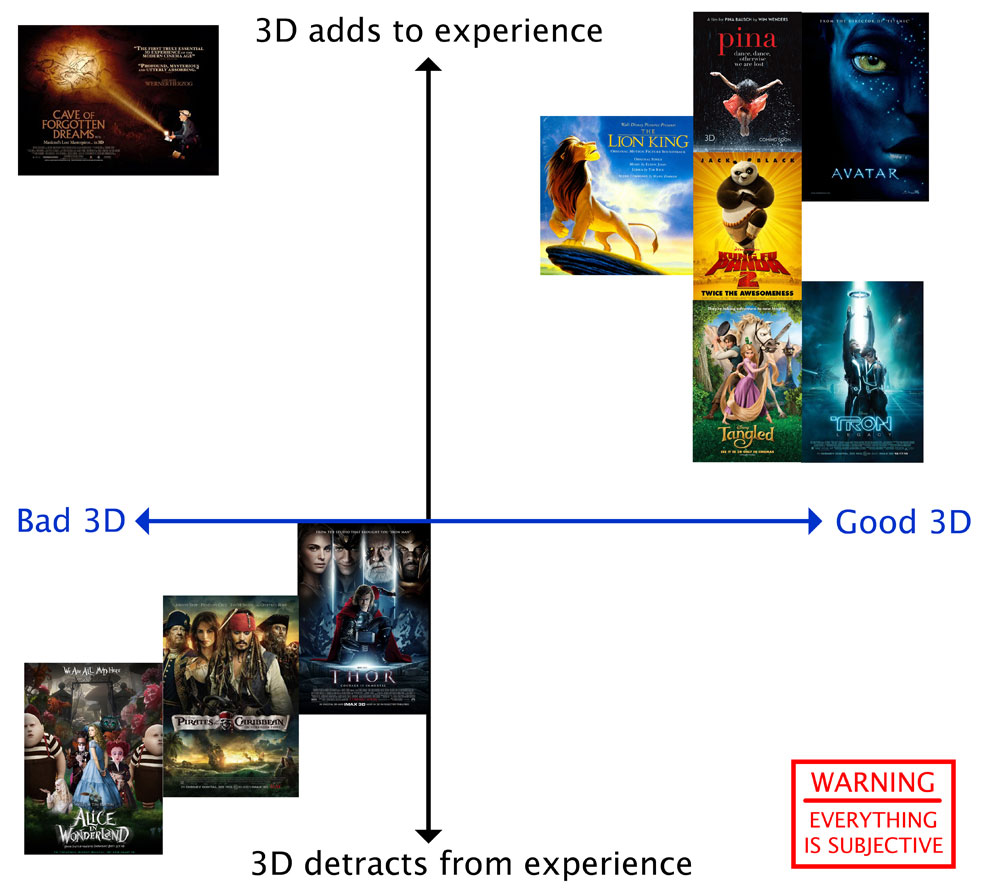
Quote special: Misleading Impressions
Thanks to Last.fm recommendations I discovered Brian Transeau (BT)’s album This Binary Universe, which turns out to be a bit different to his other albums. As I listened to his back-catalogue I thought I detected an incredible sense of optimisim and positivity. When I later found Brian Transeau was on Twitter, I found this impression was entirely correct. Sample tweet:

5am and time for our first ever sunrise, father daughter bike ride. Today is already #WIN Good Morning!

My favourite musician is probably Jon Hopkins who I now listen to instead of any other Chill Out music since for me he somehow trumps pretty much the entire genre. He is behind some of the most relaxing and beautiful tracks I know, so I was curious to see what he was like on Twitter. The answer: actually a bit different. Brilliantly, this was the first Tweet of his that I read:

I wish one of James May’s Big Ideas was to FUCK OFF

Finally, moving away from music, I referenced Mitch Hedberg’s famous escalator line in my Lion King 3D review:

An escalator can never break – it can only become stairs.

Realising I was unfamiliar with his work, I ended up reading through his Wikiquote page, and found much to like, such as:

My belt holds up my pants and my pants have belt loops that hold up the belt. What the fuck’s really goin on down there? Who is the real hero?

and:

When you go to a restaurant on the weekends and it’s busy they start a waiting list. They start calling out names, they say “Dufresne, party of two. Dufresne, party of two.” And if no one answers they’ll say their name again. “Dufresne, party of two, Dufresne, party of two.” But then if no one answers they’ll just go right on to the next name. “Bush, party of three.” Yeah, what happened to the Dufresnes? No one seems to give a shit. Who can eat at a time like this? People are missing! You fuckers are selfish. The Dufresnes are in someone’s trunk right now, with duct tape over their mouths. And they’re hungry. That’s a double whammy. Bush, search party of three, you can eat when you find the Dufresnes.

So after that I naturally looked him up on YouTube, and at that point discovered him to be completely different to what I had imagined:

http://www.youtube.com/watch?v=2491LucLa1g

Gone, try this one:

Picture
A lot of infographics annoy me, but I like the idea of bringing together the data that drives this one so much I don’t mind its shortcomings.

Puzzle – The Two Envelopes
I can’t believe I haven’t put this one in Things before.

In a standard abstract setting with no distracting details, you and another person are presented with two envelopes. One envelope contains some money (but you don’t know how much). The other envelope contains twice as much money. You get to select an envelope, and you get to keep however much money is in it. The other person gets the other envelope. There isn’t anything to go on, so you choose one of the envelopes for arbitrary reasons.

Before you get to open it, you are offered the chance to change your mind, with the following reasoning:

You don’t know how much money is in your chosen envelope, but for the sake of argument let’s say it’s £10. That means you either have the envelope with twice as much money (so the other contains £5) or you don’t (so the other must contain £20). So if you decide to swap, there’s a 50% chance you get that £5, and a 50% chance you end up with the £20. Since you currently have £10, that means there’s a 50% chance of effectively losing £5 and a 50% chance of gaining another £10. Imagine if the universe split into two at the moment you made that decision – one of you loses £5, the other gains £10, so on average you gain (£10 + (-£5) )/2 = £2.50. Since the average gain is positive, clearly that’s a gamble worth taking, and you should definitely swap.

This is of course a strange conclusion. You effectively chose an envelope at random, so how does swapping it improve your odds of getting more money? The paradox is even more stark if we consider the fact that the other person could be convinced to swap by exactly the same argument.

Previous Puzzle – Co-operating with yourself
Last time I asked how well you would get on with yourself.

Xuan said:

They say that people you dislike/hate are likely to be people who’s characteristics are most like yours. People are most critical of what they see in the mirror. My clone better not have the same taste in clothes.

Which reminded me of a problem the sci-fi stories don’t tend to go into – if there’s suddenly two of you, you’re going to need some more clothes, and one of you will probably have to find another job, and probably somewhere else to live. Marriages get complicated. Phil suggested David Gerrold’s time-travel sci fi story The Man Who Folded Himself for an in-depth dissection of this kind of problem.

Richard observed that he tends to like people with whom he shares attractive personality traits, and dislike those that share his negative personality traits, suggesting that the latter may be because they serve as a reminder of these aspects of himself. This potentially makes the question even harder to answer, although one might guess that a negative would trump a positive and ultimately lead to the kind of confrontations that usually crop up in sci-fi versions of this problem (and endorsing Xuan’s observation).

I think the question raised by The Man Who Folded Himself of co-operating with a version of yourself in the future is a clue to how we can actually ask this question of ourselves. In a very real sense, we really do choose how much to co-operate with our future selves every day: will you do a chore now, or will you force your future self to do it instead? Will you eat all of the cake, or will you save some for your future self? If you know how you generally answer those questions, I suggest this gives you an idea of how well you would get on with yourself.

In practical terms, just thinking of these kinds of questions in this framework makes me more likely to co-operate with my future self, which is probably a good thing. Well, I’m glad that my past self thinks that way, anyway.
Categories
Old

Things 53: Sita Sings the Blues, FFFFound Quotes

(Originally sent July 2009)

A slightly different format for Things this week, as I have two things to heavily recommend and also realised I had gathered a nice set of quotes from ffffound.

Event
The Hide&Seek pervasive games festival takes place from Friday 31st July to Sunday 2nd August [2009] in and around the Royal Festival Hall, and is free. See the games they plan to run across the three days here.

I definitely plan to attend, so let me know if you are interested. It’s like a more polished version of the Sandpit event that I went to a few weeks ago. To get an idea of what it’s like, see my blog post.

[Do note that this is a re-posted blog version of an old email. At the time of posting, the next Hide&Seek Sandpit event will happen on Thursday 4th August 2011 – T.M. 24/07/11]

Films
I saw Evil Dead 2, which like Evil Dead is less like a horror film and more like a nightmare you have after watching a horror film.

I saw Coraline, which was very beautifully made, but somehow not quite as neat and satisfying as the novel.

I saw Tokyo, which was a collection of 3 very strange short films about Tokyo, and is the kind of thing I would like to see a lot more of even though I only really liked two of them.

But more importantly, I saw Sita Sings the Blues, a feature-length animation by Nina Paley, which is a) good and b) free to download.

It covers a certain episode from the Hindu epic Ramayana, uses a range of animation styles, some songs from the 1920s, and includes debate between storytellers about different versions of the story, which I particularly liked. You can see some of this in the trailer:

Different ways to watch it can be found here, including just watching it on YouTube:

The story of how the film interacts with copyright law is also interesting.

Quotes
FFFFound!” is an invitation-only site where select graphic design types post up images they like (warning: NSFW about 5% of the time). Sometimes the images simply depict a quote. Here’s some of my favourites, alongside some other quotes:

1) “If you can’t explain it simply, you don’t understand it well enough.” – Einstein

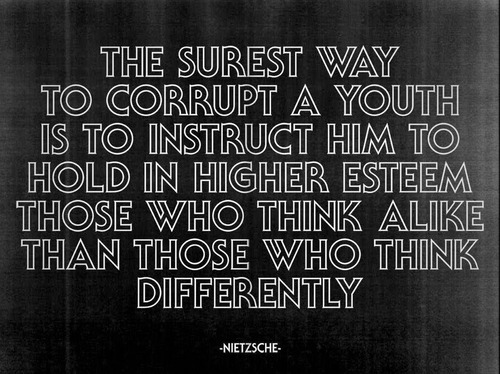
2)

3)

I think the fact that the source of this quote is unknown strengthens it. As soon as you attach a name to it, the question of that person’s own mortality suddenly clouds the quote’s otherwise clear, zen-like nature.

4) (Actually this one is not from ffffound, or particularly a quote). In a discussion about the technological singularity (advances in technology accelerate, we invent self-improving AI which improves itself at an accelerated rate, until a day comes in which so many advances are made it is impossible to predict what might happen after), Vernor Vinge suggested that the super AI would not consider humans to be worthless and wipe us out, since it should see us as a useful backup.

When Steward Brand of the Long Now asked how long a dangerous intermediary period might be during which AI’s would be “smart enough to exterminate us but not yet wise enough to keep us around”, Vinge answered:

About 4 hours.

So watch out for that.

5)

6) Georges Perec:


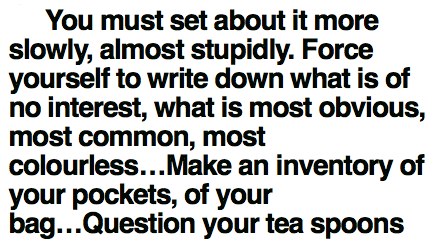
For the full quote go here. [You may notice that many questions/puzzles that appear on Things are in this spirit. – T.M. 24/7/11]

Last week’s puzzle – CC list issues
Given the lack of response on this issue and no fully satisfactory solution being evident, I’m going to go with the least bad solution as I see it: one CC list for people at RAPP, one for everyone else. We’ll see how that goes.

Categories
Special

Curating Things: How I Find Interesting Stuff on the Internet

As you may have noticed, I’ve fallen out of the habit of writing Things a bit more than usual recently, so I’m using that as a tenuous cue to instead write a post about how I find interesting things on the internet for Things generally (because that’s the bit I have still been doing).

1) Basic Aggregation
We all come across interesting things on the internet one way or another. The most basic thing I do is aggregate things I think would be suitable for Things in a Google Doc. The theory is that I then review that document once a week and pick an interesting thing from each category to put in Things that week.

2) Google Reader Magic
I find a lot of stuff through my RSS subscriptions, which I follow in Google Reader. RSS is really great. Unfortunately most people can’t be doing with it, so they end up using things like Facebook or Twitter or Tumblr to do something similar, which is great in some ways and terrible in others. But that’s a post for another time.

Some RSS feeds, though, update far too frequently for me to follow. Examples of this include Boing Boing and FFFFOUND (sometimes NSFW). I put these in a folder called ‘overabundant’, and any time I check there may be several hundred unread items.

Google Reader lets you sort items newest first, oldest first, or by magic, which is to say, in decreasing order of how likely Google thinks you are to like them, based (presumably) on Google algorithmic magic leveraging the data from people that use Google Reader. In this way, I have Google do a lot of the heavy lifting in terms of finding the most interesting stuff.

3) Twitter + IfTTT + Read It Later
As I mentioned a while ago, Read It Later is a really great service where a single click pushes any given web page to your ‘Read It Later’ list, which you can then return to when you have time from the same browser, another browser somewhere else, your smartphone, or your tablet. (Here’s their analysis on how they see this time-shifting happen by platform).

I follow some people on Twitter (including some Things recipients) that regularly post interesting links. I browse Twitter on my smartphone whenever I find myself in some kind of liminal time. So what I needed to do was find a way to pass links I find in Twitter over to Read It Later.

There’s probably a few ways to peel this potato, but I found a very easy solution in the form of If That Then This, a brilliant service which lets you glue different things together with a simple “If <x> Then <y>” structure. If I ‘favourite’ a tweet on Twitter, IfTTT looks for a link in the tweet and then puts that link into Read It Later. (I also use IfTTT to automatically cross-post my webcomic to Tumblr each week, among other things. It’s really great. You should put your email address down for an invite).

The really neat trick is that Read It Later pushes my saved content to my phone, so when I find myself in a slightly less liminal state (like travelling on the tube), I can read these articles even if I no longer have internet access.

Now, if I find an article to put on Things in this way, the process gets a bit ugly – I can tag it as ‘Things’ and then harvest it into the Google Doc later, or forward it to myself by email and capture it that way. Neither is great. But the overall advantage is that I get to read a lot of good, long articles, although I’m reading fewer books (so I’m cancelling my Wired subscription), and the Things category of ‘links’ now has a massive backlog, so I may have to change up the format a bit.

So there you have it. I’d be interested to know if you have any different methods of finding good stuff on the internet, or if you can see any clear improvements to the techniques I describe above.

(While on the subject, I suppose I should mention that I am on Twitter as @metatim, where I post links to stuff I do on the internet, including Things, and also including this very post).

Categories
Old

Things 52: Pug Baroo, Location Based Services, Argument Visualisation

(Originally sent June 2009)

Last week, Things was once again postponed due to time pressures burning my midnight oil candles at both ends. However, now that both my IDM evening course and my PhD are over, I theoretically have more time, and I’ve also made progress with my answer to the puzzle from Things 46 on how to get things done at sub-weekly intervals (see puzzles section below), so future updates may return to regularity.

Films
I finally caught Synecdoche, New York. Imagine Charlie Kaufman (Being John Malkovich, Eternal Sunshine of the Spotless Mind) doing a ‘Memento Mori‘ piece. It’s like that. I think it’s the best film I’ve seen since Speed Racer, which is a statement almost entirely devoid of utility or cogency.


Video

It’s been quite a while since I featured a ‘cute animal’ video. Here’s three pug puppies demonstrating the comedic value of turning your head on one side when confused, an action which, as I understand it, is referred to as ‘baroo’ in cute animal watching circles.

Link
Location based services – most commonly applications on your mobile that help you do things by knowing where you are through GPS or mobile phone mast signal interpolation – are on their way. (In terms of the hype cycle I think they are currently falling from the ‘peak of inflated expectation’ to the ‘trough of disillusionment’ before finding genuine utility). Mathew Honan tested a bunch of these services and wrote about it in Wired, in a long but important article.

My personal take is that most of the services he tries are like MySpace in that they work okay when the only other people on there are People Like You, but in order to scale they will need Facebook-like privacy control. (Specifically more like the new controls Facebook are adding to the publisher, and I also suspect a time window would be added – e.g. Share my live location with these people, for the next 8 hours only).


Quote

I like to think the years I spent in higher education were successful by this rubric:

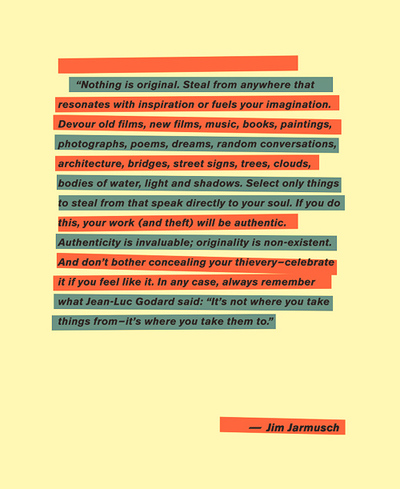
“Nothing you learn in the course of your studies will be of the slightest possible use to you in later life – save only this: that if you work hard and intelligently, you should be able to detect when a man is talking rot. And that, in my view, is the main, if not the sole purpose of education.”  – John Alexander Smith


Picture

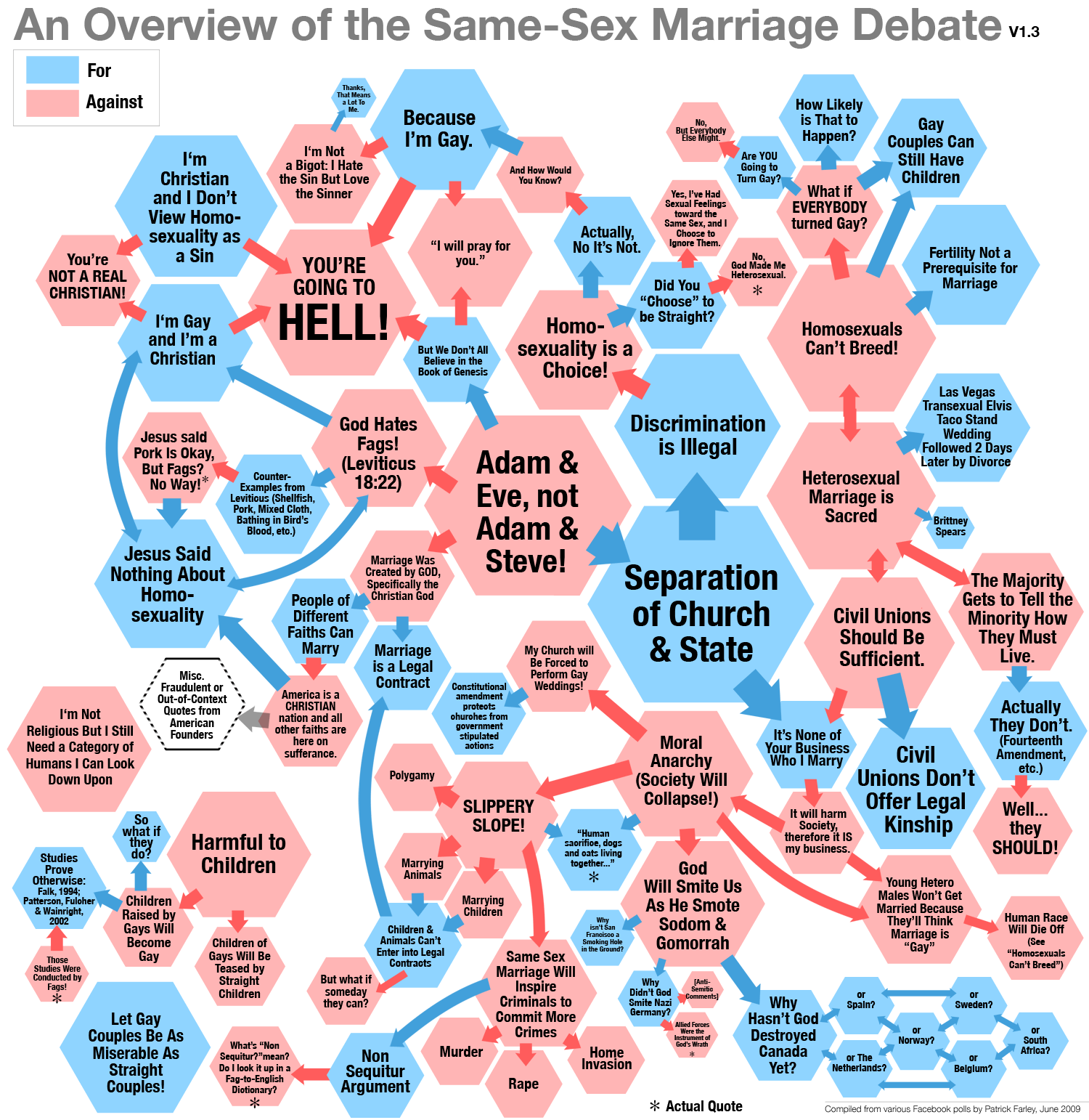
I’m interested in creating useful visual representations of arguments, as I feel sure there is a good way to do it, but I haven’t seen one yet. (I’m currently working on an idea for one which will appear in Things when I have a first draft).

Here’s a version for the same-sex marriage debate by Patrick Farley, based on observed debates on Facebook, which is pretty good (click for big):


This week’s puzzle
As the number of people on the CC list for Things has grown, the amount of reply-to-all discussion seems to have decreased. Currently there are 11 people on it, including me.

It seems clear that some threshold has been passed and a CC list discussion really works best with around 5 people.

The puzzle is, how should this be resolved? For example, I could create one CC list for the first 5 people that were on it, and another for the rest. Or I could create one CC list for people from RAPP, and another for everyone else.

Both of these solutions have disadvantages. What do you think?

On a related note, how do you think I should credit people’s answers to each Week’s puzzles? (In the example below, I summarise the answers people gave that matched my own thinking, and cite by first name the answer I hadn’t considered).

Puzzle from Things 46
I asked for good ways to develop routines with time periods somewhere between daily and weekly. My answer was a spreadsheet programmed with the intended goals and frequencies and set to load up when I switch on my PC.

After trying this out for a few weeks it seems to be successful, and I’ve uploaded a demo version. For a given task, a given ‘davelength’ (a portmanteau of ‘day’ and ‘wavelength’, setting the intended number of days I want to elapse between instances of the task), and a weighting factor, the spreadsheet highlights if I am due to do any tasks today, and if so, which one to prioritise. Upon completing the task I just have to enter the current date in the ‘Date last done’ field.

It would probably work well as an iPhone app, which means someone has probably done it already.

Last week’s puzzle
Reasons people prefer reading writing on paper than a screen seem to breakdown in to 3 main categories:

1) Visual. Resolution and emissivity of screens are issues. In principle technology should be able to overcome these concerns.
2) Convenience. A piece of paper can be folded and put in a pocket, annotated, pinned to a wall, doesn’t need electricity, and is easily carried around to read in many situations. But once again, technology could theoretically match this in most regards, and exceed it in others – think adjustable font size, editing rather than crossing out, digital annotations (including a social aspect), searchable text, and backed up data, for a start.
3) Cultural Inertia. Even if technology addresses other concerns, people that have grown up reading from paper will be resistant to change. The added convenience factors mentioned above will have to be significant before a real transition can take place. (Thanks to Laurence for pointing out this one).